
If your home doesn’t feel the way it should, too drafty, too cold, too inconsistent, the first question most homeowners ask is simple:
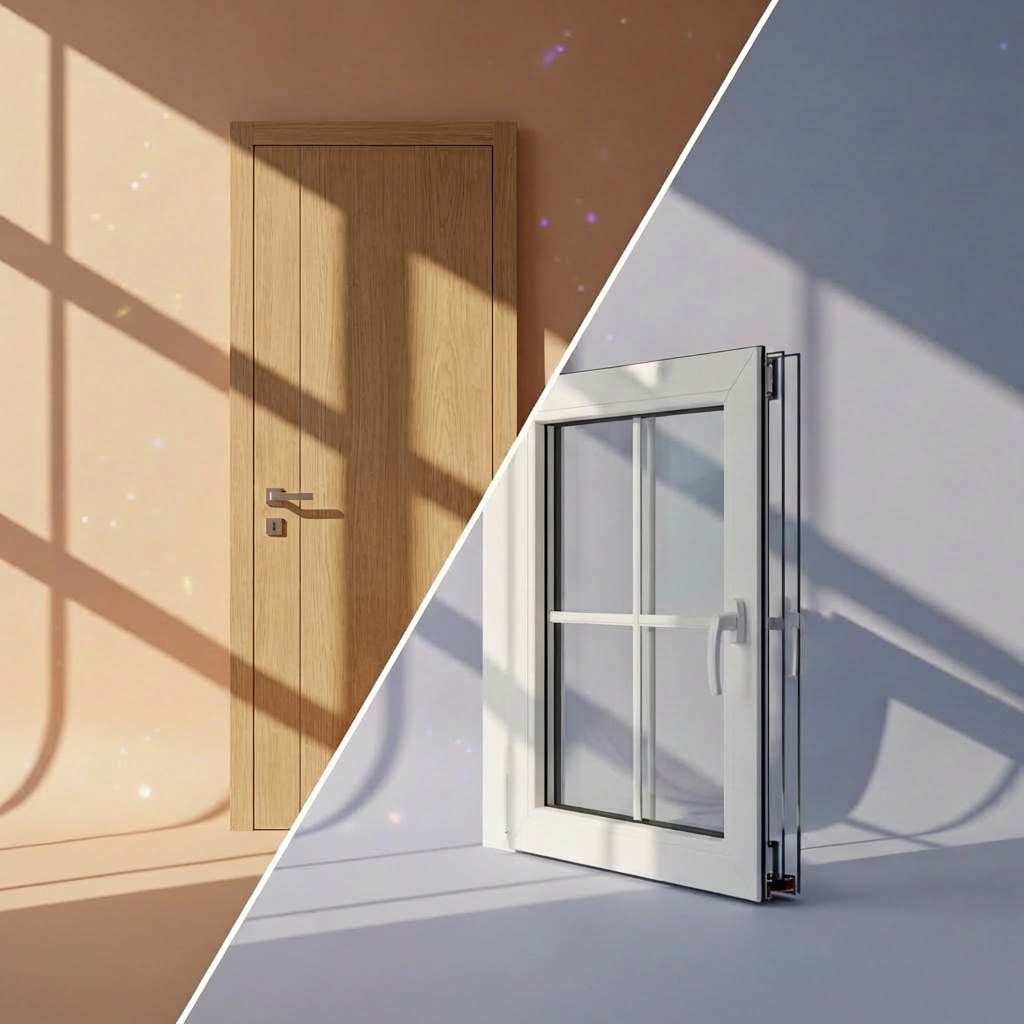
“Is this coming from my windows or my door?”
The tricky part?
The symptoms feel almost identical.
A cold draft in the living room… is it the window?
Air sneaking in by the entryway… is it the door?
A room that can’t hold temperature… is it the whole system?
So if you can’t replace everything at once (and most people can’t), how do you figure out which one actually needs attention first?
Let’s walk through it together.
First, Why This Question Is More Confusing Than It Sounds
Windows and doors fail for totally different reasons, at totally different speeds, but the comfort problems they create feel the same.
Drafts feel like drafts.
Cold spots feel like cold spots.
Temperature swings don’t explain the cause.
And because most homes are built with windows and the front entry installed around the same time, they often age out together. That means homeowners are left guessing.
So let’s clear it up.
Signs Your Exterior Door Is the Real Problem
A door usually gives off very specific clues when it’s failing. Look for:
- Light coming in around the edges. Even a tiny sliver of daylight means major air movement.
- Loose or worn weatherstripping. One of the fastest ways for air to leak.
- A soft, cracked, or sagging threshold. If the bottom of the door is compromised, drafts will be constant.
- Warping or sticking. Wood doors especially can twist or swell over time, breaking the seal.
- Air moving near the handle side. One of the most common leak points.
- Noise traveling easily through the door. A sign the slab or frame has lost density.
If any of these sound familiar, your door is likely the comfort culprit.
Doors fail more suddenly and more dramatically than windows.
Signs Your Windows Are the Real Problem
Window failures are usually more subtle and spread out across multiple rooms. Look for:
- Fogging or condensation between the panes. That means the seal failed and insulation is gone.
- Drafts in more than one room. A door can’t cause that. Multiple windows can.
- Hot or cold rooms your HVAC can’t control. A sign of glass performance issues.
- Windows that stick, drag, or won’t stay open. This points to frame or balance failure.
- Feeling heat radiating off the glass. Often a low E-value issue.
- Windows older than 15–20 years (builder grade). At that age, performance loss is normal — especially in Texas.
If you’re experiencing these symptoms in more than one area of the home, windows are the stronger candidate for replacement.
How Each One Affects Comfort Differently
Here’s the simple breakdown:
Your exterior door
Affects one major part of the home
Creates a large, concentrated leak
Can undermine your entryway temperature dramatically
Sometimes changes day to day depending on weather
Your windows
Affect multiple rooms simultaneously
Impact the overall insulation of the home
Cause ongoing temperature swings
Lead to higher workload on your HVAC
Both matter.
One is localized.
One is whole-home.
That’s why diagnosing correctly is so important.
So Which Should You Fix First? It Depends on This One Question:
“Where do you feel the biggest comfort problem?”
If the problem is near the entry:
Fix the door first.
You’ll feel the difference right away.
If the problem is in several rooms:
Fix the windows first.
One door can’t cause discomfort in the entire house.
If both are failing:
Choose the replacement that affects the space you use most, or the one causing the biggest day-to-day frustration.
If security or weather exposure is a concern:
Door first.
If long-term efficiency is the priority:
Windows first.
There is no wrong answer.
But there is often a clearer answer once you know the signs.
Do These Jobs Overlap? Nope.
A very common misconception is that windows and doors should be replaced together.
They don’t overlap.
They use different installers.
Different materials.
Different scopes.
Different timelines.
You’re not saving anything by bundling unless it’s simply more convenient for you.
This is why prioritizing based on comfort makes far more sense than picking both at once.
How Southwest Exteriors Helps You Choose the Right One First
We don’t start with products.
We start with problems.
We diagnose your home with:
• A window analyzer
• Door frame inspections
• Air-leak checks
• Comfort readings in problem rooms
Then we explain the findings in simple, human language so you can make a confident decision without pressure.
If one job can wait, we’ll tell you.
If one makes the bigger difference immediately, we’ll show you why.
And every quote we give stays valid, so you decide on your timing, not ours.
The Bottom Line
Your windows and your exterior door both matter for comfort, but they fail differently and affect your home in completely different ways.
When you understand the signs each one gives off, choosing which to replace first becomes simple.
Your home tells the story.
You just need someone who can help you read it.
If you want clear answers, we’d love to take a look with you.
Schedule a commitment-free consultation and we’ll help you decide which upgrade will make the biggest difference in your comfort, your energy use, and your peace of mind.
_2508041318431-Feb-06-2026-11-37-52-0078-PM.jpg)