
If you’re picturing tarps everywhere, dust on every surface, and weeks of chaos, take a breath. Yes, replacing windows can get messy, especially with full-frame replacement (the right way to do it in Texas heat and weather). But messy doesn’t have to mean stressful when the installer has a plan.
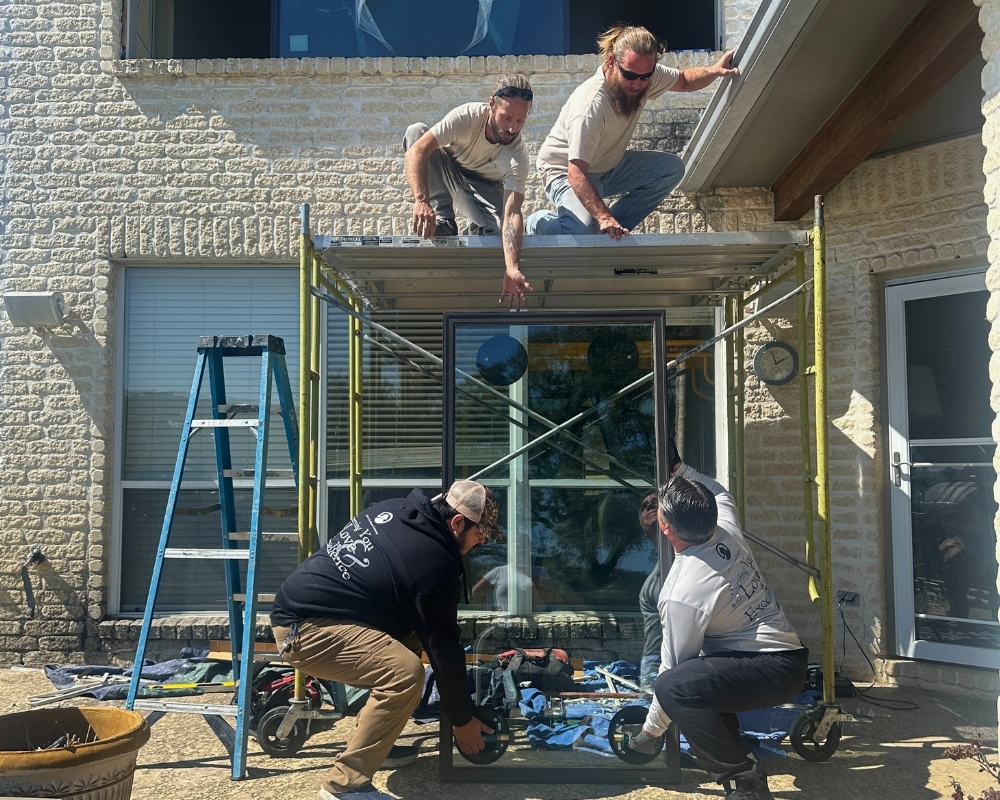
Below, we’ll cover what creates mess, how we contain it, what you can do to prep, and what “clean” means when we’re done.
Jump to FAQs: Clean Window Install Checklist
Why window projects create mess (and why that’s normal)
- Full-frame removal: We remove the entire old unit to the rough opening. That means cutting sealants, pulling fasteners, and sometimes trimming back materials. This is basically where debris and dust happen.
- Exterior work: Replacing flashing and sill pans, as well as weatherproofing creates some exterior debris.
- Sawing/drilling: Minimal, but necessary for proper fastening and shimming.
- Texas dust & wind: Openings are…well…open for short periods of time. Our crews try and limit this period of time to minimize your home’s exposure to the elements.
Short version: Construction is an inevitable mess. But how that mess is controlled is the difference.
How we control dust, debris, and disruption

Inside the home
- Floor protection from entry to each work area (drop cloths/ram board as needed).
- Furniture protection and strategic moving (with your permission).
- Plastic isolation at high-dust stages (when appropriate).
- Vacuum the area to try and limit the travel radius of the debris. .
- Daily walkthrough & cleanup before we leave.
At the opening
- Careful demo to reduce debris and trim damage.
- Vacuum-as-we-go during removal and foam trimming.
- Full-frame weatherproofing: sill pans, flashing tapes, back dams, done neatly to keep “wet” work contained.
Outside
- Landscape protection (drop cloths at beds/walkways).
- Magnetic sweep for stray fasteners.
- Debris haul-away same day.
What you can do to prep (Homeowner checklist)
- Clear a 3-4 ft path to each window (move small furniture, lamps, décor).
- Take down blinds/curtains and remove decor around the window.
- Take down anything on the walls where windows will be replaced. Vibrations from the installation could cause objects to fall from the wall.
- Cover sensitive items (electronics, open shelving) in work rooms.
- Crate or relocate pets to a quiet room, please plan for doorbell/foot traffic.
- Disarm window sensors, be sure to communicate with your alarm company before installation if needed.
- Parking & access: let us know best staging area for tools and disposal.
- Point out special concerns you may have as it comes to the construction phase of your project.
What “clean” means at the end of the day (and final clean)
_2510131420234-1.jpg)
- Floors swept/vac’d in work areas; drop cloths removed.
- Window openings and sills vacuumed; stickers/labels removed.
- Interior/exterior glass wiped; new screens installed (if part of scope).
- Old windows and debris hauled away (unless you request otherwise).
- Final punch list and homeowner walkthrough before we call it complete.
If we’re on a multi-day project, expect a reset to livable every afternoon. Paths should be clear, floors protected and tools secured.
How long is my home “in project mode”?
Every home is different, but as a ballpark for full-frame replacement:
- Typical pace: 6-8 windows/day with a 2–3 person crew (style/size dependent).
- Large bays/bows or complex finishes may lower the daily count. Where easier installations can allow us to get more per day.
Will there be damage to my walls or paint?
Our crews take great care to remove your old windows as cleanly and carefully as possible, and we work to leave each opening neat and ready for your new window.
That said, during a full-frame replacement, some minor touch-ups may be needed afterward. These usually include small repairs like a small painter’s caulk line or tiny nail holes where trim was reset. These are normal and expected with this type of project, and your project manager will walk you through exactly what to anticipate before installation day and throughout the project.
If you’re planning any interior painting, many homeowners schedule painting after the window installation.
What about lead-safe practices?
In homes built before 1978, EPA Lead-Safe Renovation rules apply. That means additional containment, cleaning, and documentation steps to protect your family and our crew. We’ll let you know if this applies and build it into the plan.
Insert vs. full-frame: which is cleaner?
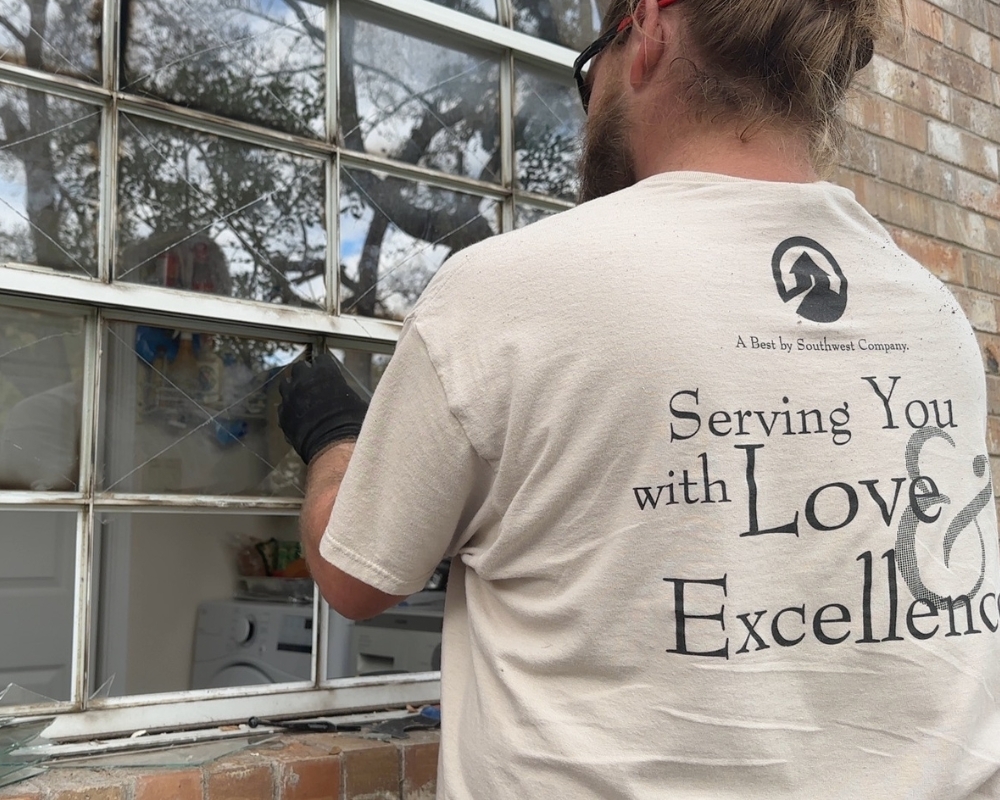
Insert installs (keeping the old frame) are usually cleaner but can hide existing issues (failed flashing, rot, insulation voids).
We do full frame only because it lets us properly flash, insulate, and seal to the rough opening which is critical for comfort and durability in Texas. It’s a bit messier that day, and a lot cleaner for the next 20+ years.
Noise, pets, and kids. Real-life expectations
- Noise: Expect intermittent drilling and prying; most activity is during removal/setting.
- Kids: We do our best to limit access to active work areas; please help us keep little explorers safely away from active areas.
- Pets: Plan a “quiet room” or daycare for anxious pets.
Quick tips to make install day smoother
- Make a “staging corner” for blinds/curtains you remove.
- Snap photos before you move décor so reassembly is easy.
- If you work from home, pick a room we won’t touch Day 1.
- Ask your Project Manager about room sequencing so we hit the right spaces at the right times.
Bottom line: Are replacement windows messy?
A little, because it’s construction. But with the right plan, the “messy” part is short-lived, contained, and cleaned before we leave each day. You’ll get a tighter, better-performing window that’s flashed and insulated the right way which is worth the temporary disruption.
_2508041318431-Feb-06-2026-11-45-16-8475-PM.jpg)